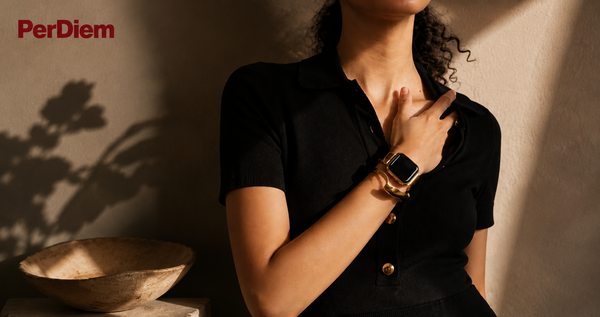
When you invest in wearable tech jewelry, you expect it to do more than just look good. You want craftsmanship that matches the sophistication of your device. Yet most straps and accessories sitting in retail display cases get made in bulk, with little regard for individual fit, material integrity, or long-term durability. That disconnect between what shoppers expect and what mass production delivers is exactly why the made-to-order model is gaining serious ground among discerning buyers. Whether you’re pairing your watch with a luxury Apple Watch strap or layering tech accessories into your everyday look, the way your piece gets made has a direct impact on how it performs and how long it lasts.
What Sets Made-to-Order Wearable Tech Jewelry Apart From Mass Production
The difference between a made-to-order piece and a shelf product goes far deeper than packaging. When a craftsperson builds something specifically for your order, every decision—material selection, stitching tension, hardware finish—gets made with attention and intent. They aren’t forced to compromise quality in order to meet a production quota, and there isn’t a warehouse shelf waiting to take in unsold items.
On the other hand, mass-produced accessories tend to focus on speed and volume. Factories produce thousands of identical pieces, which means quality control is done after issues have occurred rather than avoiding them. When defects emerge, they often reach the customer first. With made-to-order, the craftsperson catches issues before the piece ever ships because they inspect work that carries their name.
For buyers shopping for high end Apple Watch straps, this distinction carries real weight. A strap that holds up to daily wear—sweat, movement, repeated clasping—needs materials and construction that a fast-production line simply cannot guarantee.
How the Made-to-Order Process Elevates Wearable Tech Jewelry Quality
Premium Materials That Don’t Get Compromised
In a made-to-order setup, material sourcing becomes a priority rather than an afterthought. Makers choose leather grades, metals, and hardware based on performance and longevity, not just cost per unit. That’s a fundamental shift from bulk manufacturing, where cheaper substitutes routinely replace premium inputs when margins get tight.
Precision Fit and Finish
Smart accessories sit against your skin all day. Fit isn’t a nice-to-have—it’s a function requirement. Made-to-order construction allows for adjustments that factory lines skip entirely. Buckle placement, lug width tolerance, and edge finishing all benefit from hands-on attention. The result is a piece that actually sits right on your wrist rather than one that looks good in a product photo but pinches or slips in real life.
Accountability at Every Stage
When one person or a small team builds your item from start to finish, accountability runs through the entire process. There’s no hand-off between departments where quality assumptions get made and details get dropped. This continuity is one of the strongest arguments for choosing made-to-order, particularly for something as personal as a luxury Apple Watch strap that you wear every day.
Why Perdiem Takes the Made-to-Order Approach Seriously
Perdiem builds every strap and accessory after you place your order. That’s not a marketing tagline—it’s the actual production model. Nothing sits in a bin waiting for someone to buy it. Your order triggers the build.
This approach lets Perdiem use better materials without the pressure to over-stock. It also means the team gives each piece real attention rather than rushing through volume. For buyers looking for high end Apple Watch straps that hold up under daily use and still look sharp at year two, that kind of build process matters.
The brand also gives you options that mass retailers can’t match: personalization, color choices, and hardware finishes that reflect how you actually want to wear your device. That flexibility only works because Perdiem builds to order rather than to forecast.
Signs You Should Stop Buying Off-the-Shelf and Go Made-to-Order Instead
If any of these sound familiar, a made-to-order approach to your tech accessories is worth a serious look:
1. Your current strap started cracking or peeling within six months of regular wear.
2. The clasp or buckle feels loose or misaligned right out of the box.
3. You’ve replaced the same accessory two or three times in a year.
4. You want a specific color or finish combination that retail stores don’t stock.
5. You own a premium device and the strap underneath it looks like an afterthought.
Made-to-order solves each of these problems at the source. Better inputs, better process, better outcome.
Final Thoughts
Mass production made convenience king, but it left quality on the table. For buyers who treat their wearable tech jewelry as an extension of their personal standard—not just a functional add-on—made-to-order is the answer. Better materials, real accountability, and construction that reflects the care you put into choosing your device in the first place. Perdiem builds every piece after your order arrives, which means what lands on your wrist reflects real craft, not a shelf count.
Ready to Upgrade Your Wrist Game
Stop settling for straps that crack, peel, or slip. Browse Perdiem’s made-to-order collection of luxury Apple Watch straps and find the finish, material, and style that fits your life. Visit our website to place your order today.
Frequently Asked Questions
1. Does made-to-order mean a longer wait time?
Typically, yes, a few days longer than the wait time for the shelf item. However, the main point is that the piece is made to your specifications and often with higher-quality materials and greater care. Most buyers consider it a fair trade off to the short lead time in exchange for a strap or accessory that actually withstands the test of time.
2. Are made-to-order wearable tech jewelry pieces more expensive?
Usually, they have a higher first price than the alternatives that are mass-produced; however, life-cycle cost will be lower. A strap that is made properly and can be worn for up to three years is a more cost-effective option than replacing a cheap one four times in the same time period.
3. Can I customize a made-to-order luxury Apple Watch strap?
Many brands offer made-to-order, including Perdiem, and these are the ones capable of providing customization options that mass retailers simply cannot. It may be the choice of color for stitching, type of hardware finish, variety of leather, or even monogramming—these are personal touches that make your accessory unique.
4. How do I know if a brand genuinely builds to order versus just using the term as marketing?
Check lead times. A true made-to-order brand typically communicates a build window (e.g., 3–7 business days) rather than promising same-day dispatch. You can also look for customization options—a brand that stocks inventory can’t meaningfully offer personalization.
5. Are made-to-order tech accessories suitable as gifts?
Absolutely. The ability to choose specific finishes or add personalization actually makes made-to-order pieces stronger gift options than anything pulled from a retail shelf. Plan for the build window, and you’ll deliver something far more thoughtful than a generic accessory.